Play Showed Foni Who She Could Become
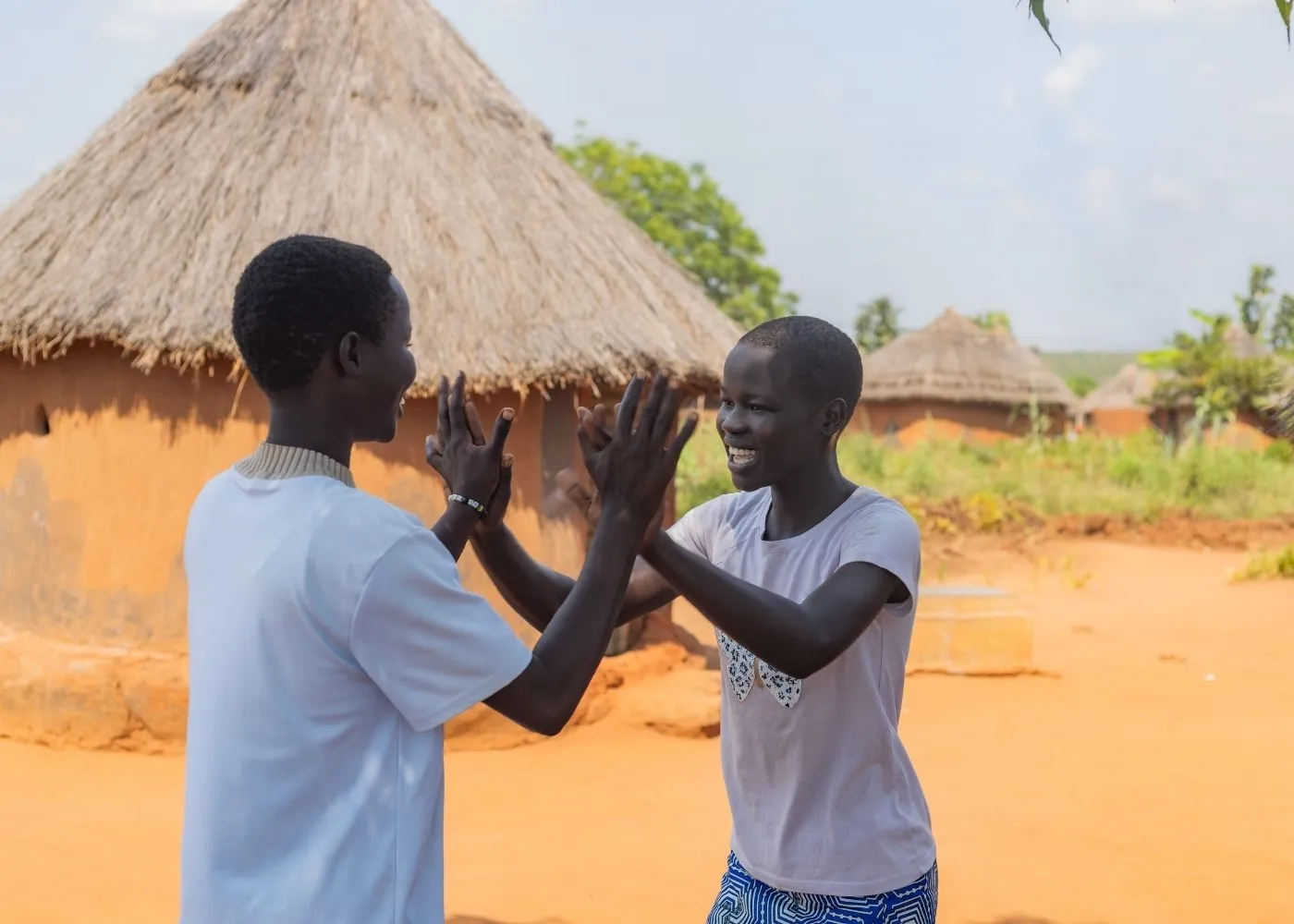
The midmorning sun shines over Pagirinya Refugee Settlement in Adjumani District as Foni laughs while playing a simple game with her younger siblings outside their home. After the early chores of sweeping the compound, washing utensils, fetching water, and preparing food, she pauses to join them in play. For Foni, play is not only a break from routine — it is a reminder of connection, resilience, and hope.
But this sense of joy stands in sharp contrast to the reality faced by many young refugees. In Uganda, depression affects around 14% or more of refugee adolescents, driven by experiences of conflict, loss, displacement, and ongoing uncertainty about basic needs like education and food. For Foni, those pressures were once overwhelming — leaving her vulnerable to negative influences and
Finding Her Way Through Uncertainty
Before joining the Game Connect project, Foni struggled with peer pressure and a lack of direction. Like many young people facing emotional and social stress in refugee settings, she found herself drawn into unhealthy influences without understanding the consequences.
"I didn't know who I was," she recalls. "When my friends were doing bad things, I thought I should join them too, thinking it would help me. But later, I realized it was not helpful at all."
Youth in refugee settlements like Pagirinya face compounding stressors — conflict, loss, displacement, poverty, and deep uncertainty about their future — that significantly increase risk of depression, isolation, and risky behaviour. These pressures often go unaddressed, with limited access to psychosocial support and few structured opportunities for young people to build confidence or belonging.
Foni's family fled conflict in South Sudan in 2016. When they arrived in Uganda, eight children were in school, but financial hardship forced some to drop out. Today, only five remain in education.
"There was no proper food, no money for school fees, and no money for treatment," she recalls.
When Foni heard about Game Connect, something shifted. "I felt eager to be part of the program because I felt it could help change my life," she says.
Game Connect is an Olympic Refuge Foundation supported sport-for-mental-health program whose main goal is to improve the psychosocial well-being and mental health of vulnerable youth aged 10–24 years, in and out of school.
During weekly Game Connect sessions, Foni joined team challenges, football activities, and guided discussions led by trained mentors. Through structured games that encouraged teamwork and trust, along with reflection sessions on peer pressure, self-esteem, and decision-making, she began to see herself differently. For the first time, she had a space where her voice mattered and where she could learn from peers facing similar challenges.
Discovering Confidence Through Play
Through Game Connect, Foni participated in structured play, life skills sessions, and mentorship activities that helped her rebuild confidence and self-awareness. The use of sport and play created a safe space where she could express herself, connect with others, and begin to heal from stress and uncertainty.
"The training helped me know who I am and how to make decisions on my own," she says proudly. "Now I know the path I want to take."
One of the spaces where this transformation is most visible is the football pitch. During Game Connect matches, Foni watches young people cheer, communicate, and support one another with energy and joy. In these moments, the pitch becomes more than a playing field — it becomes a space of healing, belonging, and possibility.
Despite the responsibilities she carries at home, Foni remains determined to continue her education. The program's combination of play and mentorship has given her both the tools and the motivation to keep going.
"The training helped me know who I am and how to make decisions on my own."
Where Play Becomes Purpose
Today, Foni dreams of completing school and joining the university to study sciences. "I want to become a doctor," she says — a goal that once felt out of reach, but now feels possible.
Foni's story is proof of what becomes possible when young people in difficult circumstances are given the space, support, and tools to discover who they are. Through play, mentorship, and community, she has moved from isolation and uncertainty to confidence and purpose — and is now building the future she deserves.
"Now I know the path I want to take."
About Game Connect
Game Connect is a structured sport-for-mental-health programme supporting vulnerable young people aged 10–24 to strengthen their psychosocial well-being, resilience, and hope for the future. The programme is implemented in partnership with the Government of Uganda, AVSI Foundation, Uganda Olympic Committee, UNHCR, and Youth Sport Uganda, and is funded by the Olympic Refuge Foundation.

