From the Sidelines to Leadership: Kémo’s Rise Through Sport
A ball arcs cleanly into the basket on a basketball court in Bignona. At the center of the action is Kémo, calling out encouragement as he directs his teammates through a para‑basketball drill. His voice carries across the court as he pauses to coach a younger player, confident and assured. Getting here took years, a community, and the simple act of being handed a ball.
Kémo was born with a physical disability. Growing up in southern Senegal, he watched other children run freely through the streets and play football into the evening. He stayed home—not by choice, but because years of discouragement and exclusion taught him that neither sport, nor public life, were meant for someone like him.
When Silence Is Learned
In many communities across West Africa, families keep children with disabilities close to home — out of protection, or out of shame. An estimated one in five children with disabilities are excluded from schooling and peer interaction, cut off from the friendships and experiences that shape a childhood. For Kémo, growing up in rural Senegal, this meant years of isolation and lost confidence.
His mother, Binta, remembers a quiet, anxious child. “Other children went out to play,” she says, “but he stayed home. He would get upset over very small things.” The separation from peers deeply affected Kémo’s mental health and self-esteem.
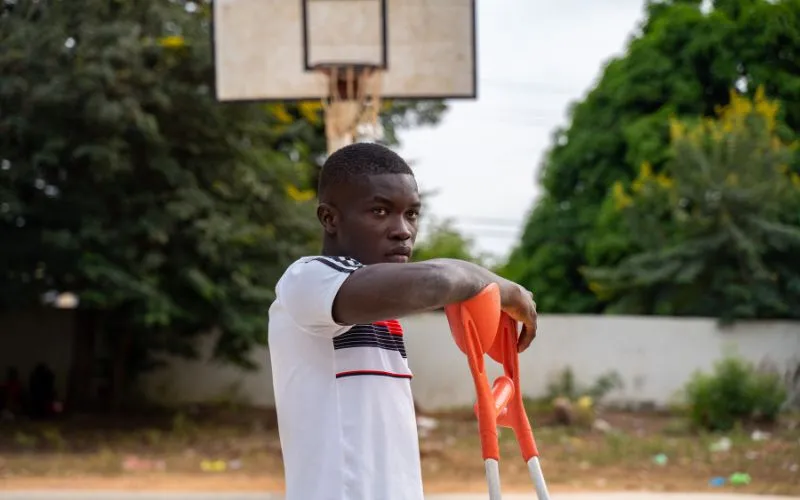
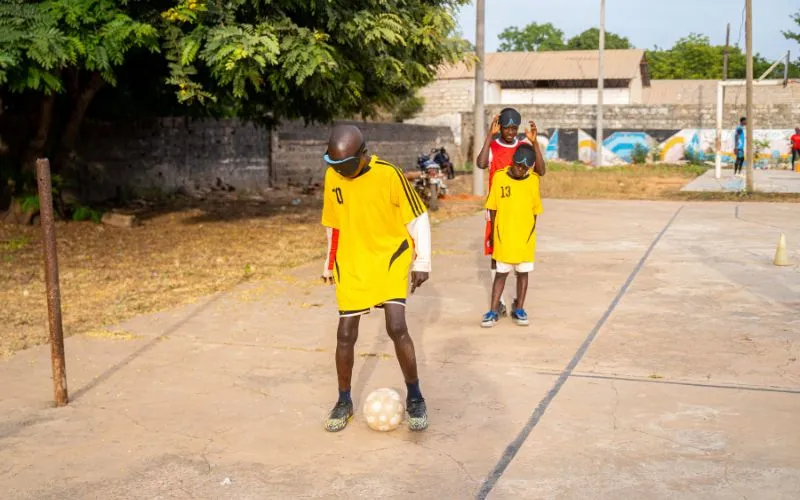
That changed in 2022 when Kémo joined Right To Play’s RECAF‑Jeu project, run in partnership with YMCA Senegal and supported by the Government of Canada. Through inclusive sports– sitting volleyball, para-basketball –alongside dialogue sessions, Kémo was welcomed onto the court for the first time.
The program weaved together sport, life-skills development and youth leadership It also addresses gender-based violence – creating safe spaces where inclusion isn’t just a goal, but a daily practice.
“Sport is not a barrier. It’s a bridge”
Finding His Voice, Then Using It
On the court, Kémo began to change. He spoke more. He laughed freely. He stayed longer. Para-basketball gave him more than physical strength—it gave him a voice. Coaches noticed him stepping forward, guiding younger players, and speaking during group discussions.
“Sport opened my world and gave me confidence.”
Through Right To Play’s programs, Kémo received training in advocacy, leadership, and youth engagement. He learned how to speak with local authorities, challenge stigma, and support others—especially children with disabilities and girls at risk of violence. The programs have reached more than 10,000 young people across southern Senegal. Today, Kémo mentors new players and actively promotes inclusion in his community.
“At first, Kémo was shy,” says Coach Toumani, President of the Bignona Parasports Association. “But over time, he became more engaged. Today, he is a leader.”
Looking Ahead
Kémo now dreams beyond the court. He wants to be someone younger children can point to — proof that disability is not a reason to stay home. He wants inclusive sport to be normal — not exceptional — and for parents to see possibility instead of limits.
His mother sees the change clearly. “As soon as he started with Right To Play, he went out. He was happy. He’s matured—he understands things now.” Through play, Kémo didn’t just find confidence. He became a leader others can believe in.
The Renforcement des capacités des filles par le sport et le jeu (RECAF-Jeu) project, implemented by Right To Play and funded by the Government of Canada, empowers young people—especially girls—in Sédhiou and Ziguinchor, Senegal to build life skills, promote inclusion and gender equality, and lead through sport. To date, it has reached more than 10,000 young people.
